

With Revolution Wind, a multi-state offshore wind farm project, now online, Connecticut has taken another step toward expanding its renewable energy infrastructure. Once fully operational, the project — touted by Gov. Ned Lamont as “key” to “lowering utility costs for families and businesses” — is expected to deliver power to 350,000 homes, or nearly 2.5% of the region’s electricity supply.
The goal of reducing emissions is laudable. But the larger question is whether Connecticut’s current path will deliver energy that is not only cleaner, but also affordable and reliable.
Right now, that answer is far from clear.
A recent study, Alternatives to New England’s Affordability Crisis, found that a more balanced energy mix — one that includes nuclear and natural gas — could save ratepayers hundreds of billions of dollars while reducing emissions and avoiding reliability risks. In contrast, relying too heavily on intermittent sources like wind and solar risks driving up costs and increasing the likelihood of grid instability.
Today, nuclear and natural gas account for 61% of energy to the region’s grid, ISO New England. If bolstered, the region could meet its projected 2050 energy needs while saving more than $600 billion, compared to a renewables-only approach — all while cutting emissions by up to 50%.
That matters in a state where residents already face some of the highest energy costs in the country.
Nuclear: Clean, Reliable, and Underutilized
Public perception of nuclear energy has shifted significantly in recent years. While past incidents like Three Mile Island and Fukushima shaped earlier skepticism, today a majority of Americans support expanding nuclear power.
And for good reason.
Experts have increasingly pointed to nuclear as a critical tool for reducing emissions. In 2018, Pulitzer Prize-winning author Richard Rhodes emphasized in Yale Environment 360 that nuclear energy is not only necessary to combat climate change, but also safer than other major industries.
The U.S. Department of Energy considers nuclear one of the most reliable electricity sources, producing carbon-free power around the clock. Nationwide, nuclear energy avoids more than 430 million metric tons of carbon emissions annually — equivalent to removing 95 million cars from the road.
In Connecticut, the Millstone Power Station alone supplies a substantial share of the region’s electricity and powers two million homes.
Yet despite its reliability and environmental benefits, Connecticut still prohibits the development of new advanced nuclear facilities — limiting one of the most promising tools available for both affordability and emissions reduction.
Natural Gas: Essential — But Constrained
Natural gas remains another critical piece of the energy equation. Millions of New England residents depend on it, with natural gas fueling nearly half of the region’s electricity generation. It also plays a key role during periods of peak demand — especially in winter, when reliability is most critical.
But access is constrained.
Connecticut relies entirely on three interstate gas pipelines: the Algonquin, Iroquois, and Tennessee. Notably, only 60% of the natural gas “that flows in CT flows back out, to New York and Rhode Island,” meaning the state only uses 40% of the natural gas it imports, according to University of Connecticut professor Fred Carstensen.
So why not expand access?
A November 2025 report from the Connecticut Office of Legislative Research identified several barriers to increasing natural gas transmission, including regulatory hurdles, legal challenges related to land acquisition, public opposition, and difficulty securing sufficient capital.
Federal policy also plays a role with the Jones Act blocking New England’s capacity to import domestically produced natural gas.
Additionally, proposed infrastructure projects such as the Constitution Pipeline — which would have transported natural gas from Pennsylvania’s Marcellus Shale to New England — have been blocked after years of legal and political opposition in New York. If New York approved the pipeline, New Englanders would see immense relief, saving $1 billion in energy costs.
As a result of stalled projects and inaction, supply remains tight, costs remain high, and the region is forced to rely on less efficient — and often more expensive — alternatives.
A Balanced Approach — Not an Either/Or Choice
The launch of Revolution Wind highlights both progress and limitation.
Renewables have a role to play. But they cannot carry the system alone — not without significant cost and reliability tradeoffs.
Connecticut does not need to choose between clean energy and affordable energy.
It can, and should, pursue both.
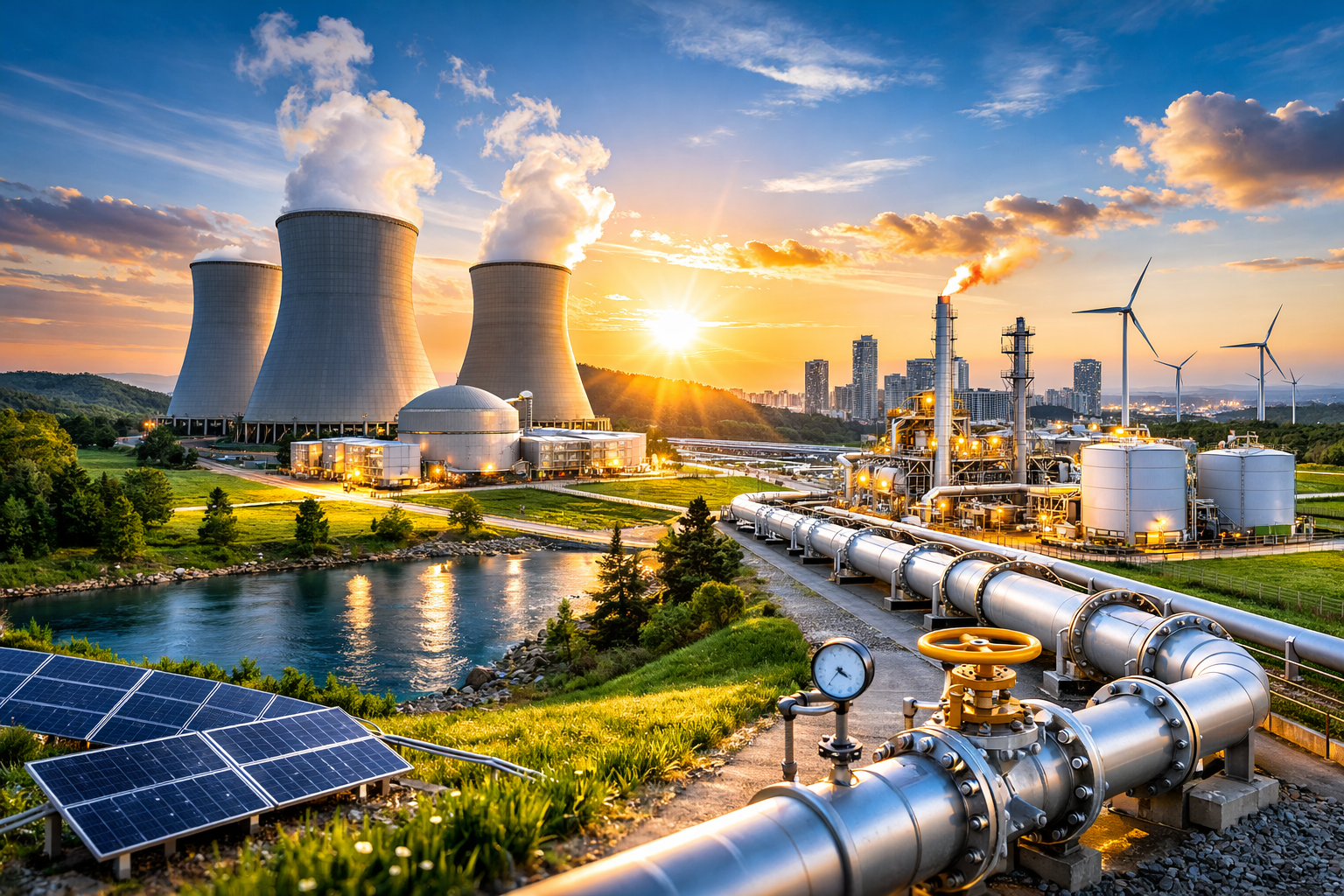
That means embracing nuclear, natural gas, and renewables working together. It means reducing barriers to reliable energy sources while ensuring long-term sustainability.
And it means recognizing that energy policy is not just about emissions targets; it is about whether families can afford their utility bills and whether businesses can afford to operate here.
The Path Forward
Some solutions, such as expanding pipeline infrastructure, require federal and interstate cooperation. But Connecticut lawmakers still have meaningful choices to make.
Legislation like HB 5336, which would allow the state to explore advanced nuclear energy, is a step in the right direction. So is a broader willingness to reassess policies that prioritize one energy source at the expense of affordability and reliability.
Building new infrastructures takes time. But policy direction matters now. For households struggling with rising costs and businesses looking for relief, the stakes are immediate.
Connecticut has an opportunity to lead in building a more balanced, resilient, and affordable energy system.
That is a future worth striving toward.