


A proposal to change how Connecticut reviews state agency regulations is drawing broad concern from lawmakers and the public, with growing calls to preserve one of the legislature’s longest-standing bipartisan safeguards.
Following a public hearing on March 18, House Speaker Matt Ritter (D-Hartford) and House Minority Leader Vincent Candelora (R-North Branford) issued a joint statement emphasizing the importance of maintaining the current structure of the Regulation Review Committee.
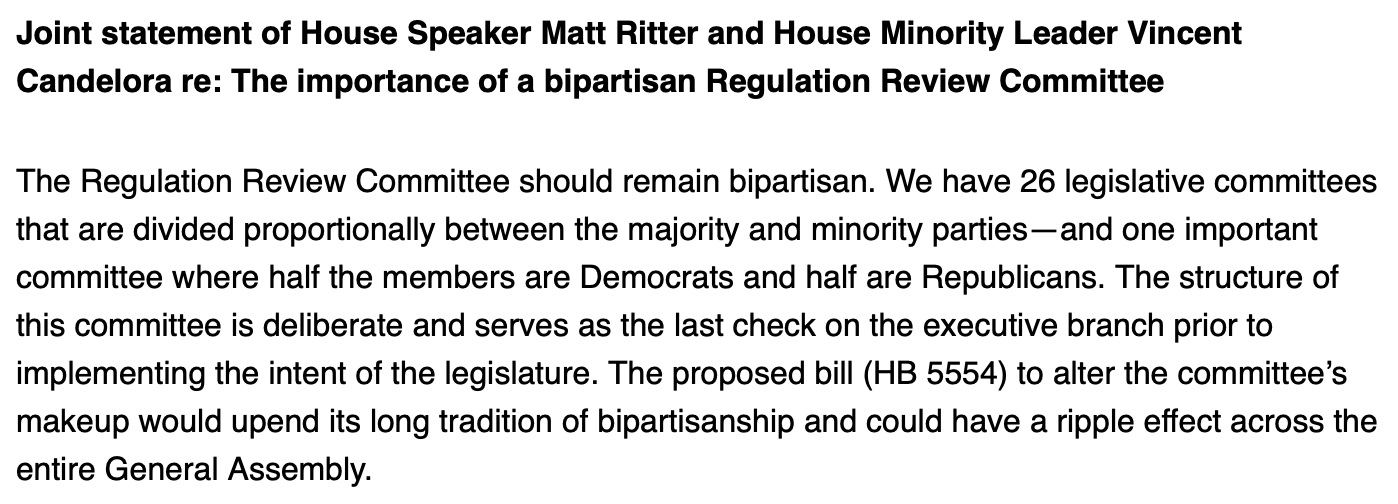
“The Regulation Review Committee should remain bipartisan,” the two leaders said. “The structure of this committee is deliberate and serves as the last check on the executive branch prior to implementing the intent of the legislature.”
The message highlights a key point of agreement: the committee’s design serves a specific purpose within state government.
HB 5554 would change that structure, shifting the committee from an even split between Democrats and Republicans to one based on party control of the legislature — consistent with most other legislative committees.
But unlike most committees, this one was intentionally designed to operate differently.
For more than 50 years, the Regulation Review Committee has operated as a bipartisan checkpoint — ensuring that proposed regulations receive scrutiny from both parties before taking effect. Because regulations carry the force of law and often determine how policies are implemented in practice, lawmakers built in this additionallayer of review to promote balance and accountability.
During the March 18 public hearing, lawmakers received more than 300 pieces of written testimony on HB 5554, all opposing the proposed change. The volume and consistency of that feedback underscored concerns about maintaining checks and balances and preserving confidence in the regulatory process.
Ritter and Candelora echoed those concerns, noting that altering the committee’s structure “could have a ripple effect across the entire General Assembly.”
That warning points to a broader principle: some parts of government are intentionally designed to operate differently.
While most legislative committees reflect partisan control, the Regulation Review Committee has historically stood apart — not as an extension of majority power, but as a shared responsibility between parties to review the actions of the executive branch.
As lawmakers consider HB 5554, the question is less about aligning processes and more about preserving purpose.
For decades, the bipartisan structure has provided stability and trust in how regulations are reviewed. Maintaining that balance would continue a system designed to ensure that major policy decisions — even those made through regulation — receive careful, bipartisan consideration before taking effect.