

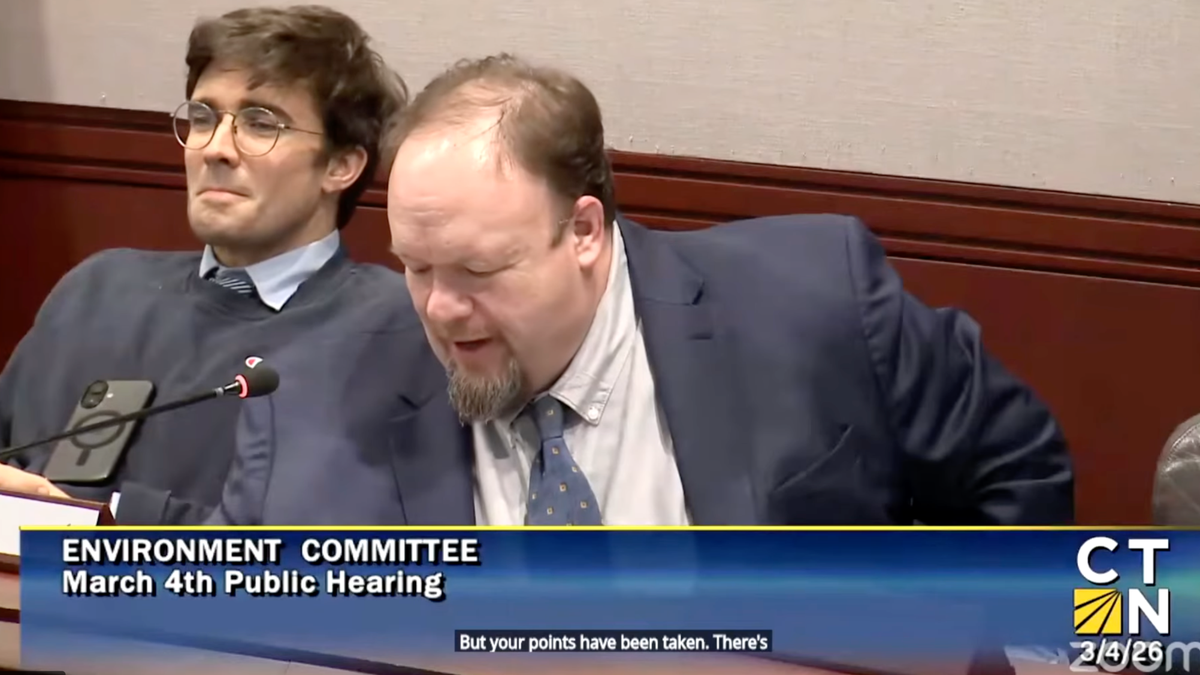
A Connecticut landscaper warned lawmakers Thursday that a proposed ban on gas-powered leaf blowers could put small landscaping businesses out of work, drawing attention online after a committee chair dismissed his testimony during the hearing.
Michael Sennello, owner of Western CT Pro Turf, testified before lawmakers on Senate Bill 319, which would phase out gas-powered leaf blowers and transition landscaping equipment to electric alternatives. The proposal would prohibit the sale of gas-powered leaf blowers beginning in 2029 and ban their use statewide by 2030.
Sennello told lawmakers his company is a small operation with one employee and said the bill could impose significant new costs on businesses like his. “I’m the little guy,” Sennello said. “Let me tell you how Senate Bill 319 affects me.”
He described the gas-powered equipment commonly used in professional landscaping and explained why he believes electric alternatives are not capable of replacing them in commercial settings.
“The battery power blowers I have extensive experience using just aren’t even remotely close,” he said, noting that landscapers require hours of runtime and consistent power, particularly during peak seasons such as fall leaf cleanup.
According to Sennello, transitioning to electric equipment would require multiple high-capacity batteries and potentially costly modifications to work vehicles for charging during the day.
“We’re talking a minimum of $1,300 to replace each blower,” he said. “And we’re going to have to spend tens of thousands per truck to outfit the truck with battery banks.”
Senate Bill 319 also proposes using funds from the state’s Public Benefits Charge — a surcharge embedded in electric bills — to help finance the transition to battery-powered lawn equipment.
Sennello raised concerns about the impact that approach could have on ratepayers.
“And you expect ratepayers like me to eat that bill through the public benefits charges in a state with the second or third highest electric rates in the lower 48 depending on which source you trust,” hesaid. “I can’t afford a rate increase on my electric bill and how popular are those public benefits charges among the constituents everybody in here ostensibly represents.”
He also warned that electric equipment could increase job times.
“If it’s going to take us two to three times as long to do a leaf pickup … we have to bill our customers for that time,” he said. “In short, this bill puts me and thousands of hardworking guys like me permanently out of work.”
Following the testimony, committee chair Rep. Rick Lopes (D-New Britain) responded briefly.
“I gotta admit that is the first time I’ve ever heard a legislative infomercial,” Lopes said, adding that lawmakers would continue working on the bill and that there was “no desire in this bill to make it onerous on small business owners.”
A video clip of the exchange was later shared on by Sennello on social media.
“This was my testimony earlier today against SB 319, which would ban gas-powered leaf blowers in Connecticut,” he wrote on X. “Check out how flippant the chair’s response is.”
State Sen. Ryan Fazio (R-Greenwich) also shared the clip, writing that lawmakers should take small business concerns seriously.
“When a small landscaper is presenting how a proposed gas leaf blower ban could put him out of work, the least lawmakers could do is not make fun of the testimony,” Fazio wrote.
Senate Bill 319 remains under consideration.
Supporters of similar measures in other states and municipalities have argued that gas-powered leaf blowers contribute to air pollution and noise. Critics counter that battery-powered equipment remains more expensive and less practical for commercial use, particularly for small businesses operating on thin margins.
The debate is likely to continue as lawmakers weigh environmental goals against cost and implementation concerns.